Showing posts with label Arizona. Show all posts

Wednesday, September 2, 2026

Summer Driving, Photography, and Goldfield, Nevada

An abandoned train car in Goldfield, Nevada. (Click on photos to view larger)

When I saw a chance for a road trip in late August, I took it. It had been a long summer. The monsoon mostly fizzled in Silver City, limiting us to early morning hikes on local trails and afternoon crossword puzzles under our ceiling fan. I’d barely lifted my camera for months, unmotivated to search for photos under a blaring sun and too lazy to climb out of bed before dawn to catch fleeting morning light. 


So I agreed eagerly to deliver a used car to our daughter in Ferndale, Washington (near Bellingham), spend a few days visiting, and then fly home. My plan was to make the 2,000-mile trip in 2.5 days, leaving a little time to take a few photographs if opportunities arose. 


I left Silver City on a hot morning, pausing to photograph familiar scenes along I-10 in New Mexico--a Lordsburg school bus, permanently parked in a gravel lot; a tire shop in Road Forks where gas is cheap--before pushing on to Tucson to spend two nights between doctor’s appointments in a surprisingly luxurious $100 hotel.


An old school bus in Lordsburg, NM.

A quonset hut in Lordsburg, NM.

Tires, Road Forks, NM.

Leaving Tucson in the late afternoon after my last appointment, I soon found myself in Phoenix traffic, inching along with hundreds of commuters, the car thermometer pegged at 115 degrees outside my air-conditioned sanctuary. I’d stopped once to photograph a canal delivering water to the city, even as Lakes Powell and Meade shrank to near critical levels and triggered water reductions for the Lower Basin States, but then the heat and traffic squelched my photographic ambition. My admiration for photographers successful in extreme weather grew. Later, between Phoenix and Kingman, I stopped briefly and photographed cacti in the blazing sun at a rest area and a lonely and strangely tilted thunderhead hanging over dry hills west of the highway, producing only virga. 


Canal southeast of Phoenix.


A tilted thunderhead between Phoenix and Kingman, AZ.


I could relate to Sally Mann, a well-known and sometimes controversial photographer, who once embarked on a long road trip through the Southeast, eager to take haunting images of old plantations and southern rivers, but days in she had nothing, lamenting:


D was keen on finding a graveyard where a Confederate relative had been buried and my heart lifted at the prospect of romantically drooping moss-draped branches and ancient, lichen-covered tombstones. Who can’t get a good picture in a cemetery? Apparently me. Hardly worth bringing out the camera. I was discouraged, the 2nd long day of this trip and so far, three gas stations, a weed-covered hill, and Stalinist blocks of stone instead of tombstones. No moss. Blazing sun, no atmospheric haze. Regular old trees. (Sally Mann from Art Work: On the Creative Life, pg. 171)

I spent that night in Kingman, Arizona in a Ramada Inn decorated with Rt. 66 nostalgia during this 100th anniversary of the iconic highway. The next morning, I woke early and headed for Las Vegas, driving through a strangely hazy landscape of sparse desert vegetation and low hills bathed in what could only be described as drab light, like a classic black and white photograph but without enough contrast. I stopped anyway, forcing myself to snap photos of dirt roads leading away from the highway toward distant hills, hoping to jump-start my creative instincts despite the light, wondering what good photographer might see that I didn’t. 


Ramada Inn, Rt. 66, Kingston, AZ.

Gate and road in drab light between Kingman, AZ and Las Vegas, NV.

Finally, I hit a little paydirt in an old Nevada mining town called Goldfield, about thirty miles south of Tonopah. I’d stopped to photograph a mildly-inspiring, abandoned gas station by the highway when a white-bearded local driving an ATV stopped to talk to me. He pointed me down 5th Street to the old ghost town and railroad yard of Goldfield, suggesting that the best photo-opps were there and needlessly apologizing that Goldfield didn’t have more to offer. I headed down 5th to an area where I could have spent the rest of the day had I not had so many miles to cover. I was in a good place in the harsh light of midday, but I tried to make the best of it, photographing old miner’s cabins, railroad cars, piles of junk, and the remarkably untouched remnants of a town that bustled with activity 120 years ago.


A strangely undisturbed miner's cabin in Goldfield.

Another miner's cabin where they finished their drinks and left town without even recycling.


Goldfield boomed after particularly rich gold deposits were found there in 1902, soon after Tonopah became a silver boomtown, drawing prospectors to the area. At its peak, 20,000 people lived in Goldfield, making it the largest town in Nevada at that time. Some of the gold was so pure that miners hid nuggets in their boot heels and hollowed-out axe handles according to legend. Wyatt Earp and his brother, Virgil, once roamed the streets. A bar in town was a block long, requiring 30 bartenders to keep the whiskey flowing. But, bust follows boom, and by 1910 the mines were more expensive to operate than they were worth, and the crowds moved on. A flash flood in 1913 destroyed some of the town, and an exploding moonshine still in 1923 set much of what was left on fire. Today, about 225 people live in Goldfield.


Old safe, Goldfield, NV.

Truck interior, Goldfield, NV.

More recently, the quirky “International Car Forest of the Last Church”, just outside of Goldfield, has become a draw for travelers. The Car Forest is an installation of old cars, buses, and trucks, embedded as if they’d flown in from outer space, nose-diving into the dirt. Graffiti artists decorate and redecorate. Hipsters make videos. The rest of us walk around in the hot sun, peering into makeshift car-rooms and watching out for snakes.


The International Car Forest of the Last Church.

While researching Goldfield, I was surprised to find a video of Alex Honnold exploring the town and its adjacent car art installation, apparently as part of a Nevada promotional campaign. If you haven’t heard of him, Honnold is famous for palm-sweating unroped climbs of massive cliffs, culminating in his free solo of El Capitan in Yosemite, a climb captured in the Oscar-winning documentary, Free Solo. He looked more comfortable in that film climbing the Monster Corner thousands of feet off the deck, unroped, than he did sitting in a makeshift radio studio in Goldfield being interviewed by Carl, the local DJ, and listening to the “Burro Weather Forecast.” He did manage to climb the vertical bus in the Car Forest, a probable first ascent that I now wish I’d ticked before Honnold when I was there in 2024 so that I could call him out on his claim. That would have been a moment of glory.


Alex Honnold claims the first ascent of the upended school bus.


Just as Goldfield quickly turned from boom to bust, so did my photography. I pulled into Winnemucca after dark that night, booking a room in the Shady Grove Motel. A few of the rooms were occupied by long-term renters—a quiet group of men gathered around a grill in the shade, cooking dinner. Across the parking lot from them, each room was labeled with the name of a saint (or perhaps towns named for saints). Christian martyrs (Ynez, Susana) guarded some rooms while others commemorated domestic activities (Rosa, the patron saint of embroidery and gardening). I pity the newly married couple booking the Santa Rita room, named for the patron saint of “impossible, broken, or deeply troubled marriages.” My room was off to the side, surprisingly large and unconsecrated. After a good meal at a Mexican restaurant a few blocks away, I hit the sack, anticipating an early start and a fourteen-hour drive to Bellingham. 


The Shady Grove Motel, Winnemucca, NV.


The last day of my trip was a grueling push with little time to stop except to get gasoline and fast food. I was lured briefly from the car between Winnemucca and Boise by a collection of animal skulls. Later, I drove into the dense smoke of Northwestern wildfires, over the Cascades, and into the rush of Seattle traffic before arriving in Ferndale in time for dinner.


Part of a large collection of skulls north of Winnemucca.

I'll finish with a few more Goldfield, Nevada photos, a place where someday I'll spend a few days.


Rocking chair in train car, Goldfield, NV.

Window curtain in an old cabin, Goldfield, NV.

Metal door, Goldfield, NV.

E-bike prototype? Goldfield, NV.


Friday, April 10, 2026

Don't Let the Old Man In

Larry Scritchfield descending Cathedral Wash in cool early morning shade.

My friend Larry Scritchfield and I set our alarms for 5:30 a.m., ridiculously early for a 3.5-mile round trip hike down Cathedral Wash to the Colorado River and back. Historically, early starts were for more serious endeavors, like climbing the Chouinard-Beckey route on South Howser Tower in the Bugaboos, when a pre-dawn approach minimized our chances of getting whacked by enormous pieces of serac falling from a hanging glacier and gave us enough time to climb the 2000’ wall, descend the other side, and get back to our camp by dark. 


Times (and climate) change, neither to be taken for granted. 


We camped at Lee’s Ferry, Arizona in March during a record-breaking heat wave that sent temperatures into the 90s, 20 or more degrees above normal and not fun to hike in, especially under a blazing sun. Also, we were slowed by health problems. My left knee had painfully given up the ghost in December, leading to an agonizing wait for early February replacement surgery, during which I could barely walk, even with crutches. Nearly simultaneously, my right shoulder and left wrist announced semi-retirement thanks to osteoarthritis, requiring steroid shots, postponed until after knee surgery to minimize infection risk. At one point, I couldn’t even lift a coffee cup (thanks Ellen for feeding me my coffee!). More seriously, Larry has pulmonary fibrosis, a lung disease forcing him to carry an oxygen concentrator (in a daypack) on hikes, limiting his range and stamina. 


Now less than two months out of surgery and dosed with steroids, I can walk a few miles and make my own coffee. Larry is participating in a drug trial that shows some evidence of mitigating his fibrosis. Despite these improvements, we called ourselves Elder Hostel canyoneers, even that moniker a little grandiose since the canyoneering in Cathedral Wash is minimal, rated 2A, meaning that there is a little scrambling and some “judicious route finding” according to the Park Service. Parents are advised to keep a close eye on their children in the canyon. We saw some children and were secretly proud, or at least relieved, when asked by their parents if we made it all the way to the river.


After our judicious hike, we returned to the shade of the van well before the heat set in, pleased with our accomplishment. I sipped a late-afternoon margarita, and Larry nursed a fizzy water while we both watched a pair of grackles eager to share our chips. On another day, we descended a less challenging (but hotter) canyon (Wiregrass) near Bigwater, where vacationers store houseboats close to the shrinking Lake Powell, itself dysfunctional in the midst of long-term Western drought. 


Short canyon hikes that would have been trivial even a few months ago become touchstones encouraging recovery. Larry and I were grateful to be in the desert adventuring again, even in oppressive heat. As we get older, health setbacks are inevitable, some way more serious than joint failures, and I’m lucky to be as healthy as I am in my late-60s. 


I'm not much of a poetry aficianado, but the dying Tony Hoagland, in his poem "Into the Mystery" acknowledged gratefulness for what might once have been taken for granted:


This life that rushes over everything

Like water or like wind, and wears it down until it shines.


Now you sit on the brick wall on a cloudy afternoon and swing

your legs,

happy because there has never been a word for this


as you continue moving through these days and years

where more and more the message is

not to measure anything.

I’m also not a country music fan, but the late singer Toby Keith, after asking the then 88-year-old Clint Eastwood how he kept going, put some of Clint's predictably feisty answer to music:

"And I knew all of my life  

That someday it would end

Get up and go outside

Don’t let the old man in"  --Toby Keith (Don’t Let the Old Man In)


Larry ledge-walking after some judicious route-finding in Cathedral Wash.

Larry downclimbing a short chimney in Cathedral Wash.
 
The Colorado River at the mouth of Cathedral Wash below Lee's Ferry.

Larry enjoying van shade after our early morning hike.

The infamous Glen Canyon Dam with the much-reduced Lake Powell behind it. Water levels are almost below the conduits that allow power generation, and "dead pool" is a real risk in the next several years due to climate change.

Tourists at the Wahweep Overlook on an extremely hot March day looking down through early season wildfire smoke at the much-reduced Lake Powell. Today's climate might look pretty appealing 20 years from now.


Tuesday, November 25, 2025

Chiricahua Storm

Storm over the Chiricahua Mountains viewed from the New Mexico Bootheel.
(Click images to view larger)

Southern New Mexico has been in drought since we moved from Wyoming over two years ago. In normal years, the Arizona monsoon brings summer storms, blocking the sun and cooling temperatures. Even then, this is a sunny place, so it's exciting when rains come as they have over the last few days thanks to two low-pressure systems that swept from the California coast across the Southwest and then into the Plains. After rain, locals check their rain gauges and send texts to each other. It can feel almost competitive.

“How much did you get??” 

“We got 0.7 inches. How about you?” 

The sunshine is nothing to complain about, especially for those of us who love the arid West. For most of us, sunny skies and expansive vistas beat the dreary gray and oppressive undergrowth of more humid places. 

Photographically, startling clear blue skies are less interesting than dramatic storms or even well-spaced summer cumuli, so I was excited last weekend while driving home from visiting friends in Bisbee, Arizona when a storm engulfed the Chiricahua Mountains of Southern Arizona. By then, we were in New Mexico’s bootheel, looking west at the mountains where the sun poked through the clouds just enough to highlight a few places in the landscape. It was spectacular, and I stopped to shoot a few photos over the barbed wire fence beside the highway. 

Roadside view. 

The big picture.

Moody version of the storm


Saturday, March 15, 2025

Public Lands Threatened

Sunset in the Potrillo Mountains, part of the Organ Mountains-Desert Peaks National Monument in New Mexico.
(Click images to view larger)

In late February, Ellen and I hiked into Aravaipa Canyon in the heart of Arizona’s Aravaipa Wilderness (BLM). A clear stream, unusual in the desert, flowed beneath cottonwood trees, leafed out to gather early-season Arizona sunshine. We disturbed a coati in one of them—it crept slowly to the ground and disappeared surprisingly quickly and a little comically into riparian vegetation. After a fun day of walking and exploring, we set up our tent under volcanic cliffs beside the stream and enjoyed miso soup, freeze-dried dinners, shortbread cookies, and a warm quiet evening under bright stars.

Volcanic cliffs above a side canyon in the Aravaipa Wilderness photographed during a February backpacking trip.

In mid-February, we car-camped with friends on the rim of the Kilbourne Hole, a volcanic maar crater in a remote part of the Organ Mountains-Desert Peaks National Monument. We’d spent the day finding petroglyphs and evidence of Pleistocene mammals near a volcanic cone. Our campsite commanded a view across the crater to the Riley Peaks, three high points in the Potrillo Mountains, one of several desert ranges in the Monument. The site had clearly been enjoyed by ORV users, and we spoke with two friendly guys from El Paso in a side-by-side when they stopped to enjoy the view. They were originally from Quebec, and it was surprising to hear French so close to the Mexican border.

Ellen with our friends Steve and Beth Buskirk on the rim of the Kilbourne Hole in the Organ Peaks-Desert Mountains National Monument. February 2025.

Earlier in February, we camped with our Laramie friend, Ed Sherline, in the Uva Mountains near the end of his bikepacking trip around the Desert Peaks. He'd covered sixty miles a day for five days circumnavigating much of the Monument and was feeling (and looking) a little grizzled when we met him on his last night. It was cold at night, but sunrise behind the Organs merited an early wake-up to enjoy layers of mountains and haze in the morning light. 

The Organ Mountains at sunrise taken from a camp in the Uva Mountains.

Those are just three of many experiences I had on public lands in February. My life and the lives of many of my friends have been enriched by these lands for well over a half century. Going back further, my father's family loved the West, and tales of their trips from Dearborn, Michigan to the Tetons in the 1940s drew me to them starting in the late-1970s, changing the course of my life. How many American family histories have been influenced by our federal lands? How many of our lives have been changed?

My father, Ed, and his mother, Nelle, on a trip west from Michigan in the 1940s to visit Grand Teton National Park, at that time less than twenty years old. The photo was probably taken by my grandfather, Ken.

In the U.S. today, few issues are nonpartisan, but protection of public lands unites people from across the political spectrum. The freedom to vacation in National Parks, explore National Monuments, hunt and fish in National Forests, birdwatch in Wildlife Refuges, or wander through remote BLM lands is fundamental to our way of life, yet we win public land battles, never the war. Who are the legislators braying loudly for the sale or transfer of federal (our) lands even while their constituents (we) object?

Ultimately, they are driven by special interests that benefit from reduced regulations so that they can more easily exploit our lands for their profit, meaning that it’s worth their while to contribute campaign funds and pay lobbyists. Oil and gas, mining, timber, and large corporate agricultural interests profit while the rest of us stand to lose our heritage, our primary means of recreation, and our avenue for enjoying the open spaces about which Westerners, including many of those trying to take them away, wax poetic with stories of free-roaming cowboys and Big Sky Country. 

In 2024, Utah filed a lawsuit at the U.S. Supreme Court that would have required the federal government to sell or “dispose of” more than 18 million acres of our public lands in Utah despite Utah’s agreement upon being granted statehood to “forever disclaim all right and title” to federal public lands. Twelve states supported this attempt even in the face of broad opposition by the public, but many did not. Martin Heinrich, a U.S. Senator from New Mexico, where I live now, stood against this, declaring, "We must stand united against this un-American land grab to ensure that our public lands remain accessible and protected for future generations. Our public lands are not for sale. Full stop." Thankfully, early this year, the Supreme Court declined to hear the case, a battle won while the war continues.

Ellen and our friend, Bay, admiring pictographs in the Bears' Ears National Monument established by Obama, shrunk by Trump, re-grown by Biden, and now vulnerable again. Of course, before Europeans, all lands in N. America were public. Cultural resources like these pictographs deserve to remain protected.

The Wyoming legislature was one of the supporters of Utah’s suit. I lived in Wyoming for nearly 45 years and spent countless weeks in its spectacular public lands along with many of my fellow Wyomingites of all political stripes. Recently, Wyoming legislators tried to pass a resolution transferring much of the federal land in Wyoming to the State. Fortunately, this resolution was defeated even in one of the reddest states in the U.S. underlining bipartisan support for protection of public land. Other efforts in Wyoming this year attempted to limit the right of private landowners to transfer land or land rights to the federal government. Many supporters of these measures in the Wyoming House are members of the Freedom Caucus. WTF?

Sunrise in the Honeycomb Buttes--BLM land in Wyoming's Red Desert. 2013.

Public lands continue to be threatened. NPS, BLM, USFS, and U.S. FWS employees are being fired, National Monument boundaries are in jeopardy, and special interests advocate for sale or transfer of our land. Many across our political spectrum are fighting these threats, but many others are complicit, and the war is never won. We can help by writing letters, attending rallies, donating funds, volunteering, and voting. Don’t let the few take away or degrade lands that belong to us all.

Gated and posted private ranchland adjacent to the Gila National Forest in New Mexico. Private landowners have the right to keep people off of their land, but we don't want our public lands to become private and locked away from us.

Friday, June 14, 2024

Livin' in a Hot Place


An ocotillo in the hot New Mexico sun.
(Click images to view larger

In southern New Mexico and Arizona, the heat arrives in early June when the jet stream drifts poleward and high pressure creeps in from Mexico chasing the cooler air north. For at least a month until the monsoon begins, the sun drills down from cloudless skies and heat rises from the parched ground. With almost no humidity, the sun hits like a hammer.  

When we were in Kashgar, China in 2006 during the oppressive heat of the Central Asian summer, locals carried beds into their yards to sleep. In the warm evening after the sun relented, Uyghur men gathered around outdoor television sets smoking and talking in the light of flickering screens while outdoor food markets came alive with families socializing and eating fat-tailed sheep cooked on spits over smoky fires and sprinkled with spices. 


My mother died in May on a hot day in Cedar Park, Texas where she’d lived since leaving the humid swelter of the mid-Atlantic. She spent most of her 90 years in hot places, growing up in Enterprise, Alabama before air conditioning was the norm. Her father helped build the Pan American Highway, toiling in the tropical heat of Central America, a cigar clamped in his teeth. Later, he owned a furniture store where as kids we’d leave the coolness of the showroom to explore the hot dusty warehouse, shared with a feed store where a pet monkey swung from the rafters. On the street, men sold soggy bags of boiled green peanuts in the heat.


Extremes at both ends of the thermometer breed story tellers and songwriters. In wintry places, they huddle around fires, entertaining each other, their backs to the cold. Where it’s hot, they languish on porches, facing outwards from the shade into the bright sun, making up new stories and retelling old ones, glad they aren’t out in that infernal heat.


Heat in literature and movies is at least as evocative as location, enveloping us in its pall. Characters sweat and chafe, and passions run high. A writer (unnamed at the link below) observed that: 


“Humanity ferments in the heat. People become visceral, bodies betray minds with their baseness. Morals loosen along with muscles. Secrets spill out of open windows, buttons come undone. And while in reality we might groan more with perspiration then passion, fictional characters can be far more comfortable getting hot under the collar without so much as a desk fan for relief.” (Penguin Books)


Robert Earl Keen and Lyle Lovett wrote the iconic The Front Porch Song watching East Texas pass by during a hot summer in College Station while trying to avoid being Texas A&M students. “This old porch is just a weathered, gray-hair seventy years of Texas,” Keen wrote. He mixes humor and nostalgia during live performances, pausing mid-song to describe his landlord dragging him off of the porch into the heat to help with chores:


“…our conversations were only interrupted by my landlord, Jack Boyett, who was 70 years old at the time. He’d roll up in the heat of the day and roll down the window on his pickup truck just enough to be heard and not enough to let any of the air conditioning escape, saying, ‘Robert Keen, Robert Keen. Can you come help me for a minute? I’d spend the rest of the day mowin’ lawns, movin’ furniture, diggin’ skinny cows out of the mud out there at his old ranch.”


Heat rounds off the edges and stretches out the vowels. The Southern Drawl. The Texas Twang. Slide guitar. Fatty food. It’s too hot for crisp transitions.


Landscapes that invited exploration in the cool of winter become barren hellscapes in triple-digit heat. Soap tree yuccas shimmer. Sand burns bare feet. Dust devils spin across white hot playas. Snakes come out. We go into the mountains looking for cool mornings and places to swim, hoping not to be squeezed off the tops of them by the warming climate, lucky if we have the means to migrate. 


But the heat is part of living in a desert, and just as we embraced the Wyoming cold, we will learn to tolerate New Mexico heat, getting up earlier to walk, napping, trimming the cat’s fur, drinking ice water. A little heat is a small price to pay for a long mild winter, and even in the worst of it, the evenings are perfect if you stay far enough back from the bbq grill.


Uyghur men in Kashgar after the sun has left.

A Uyghur boy pushes fat-tailed sheep on a market day in Kashgar.


My mother, Barbara McCall, on her porch in Enterprise, Alabama with pets. She lived in hot places (with pets) her whole life, and even kept her apartment in Texas at 80 degrees when she could turn the heat up that high.

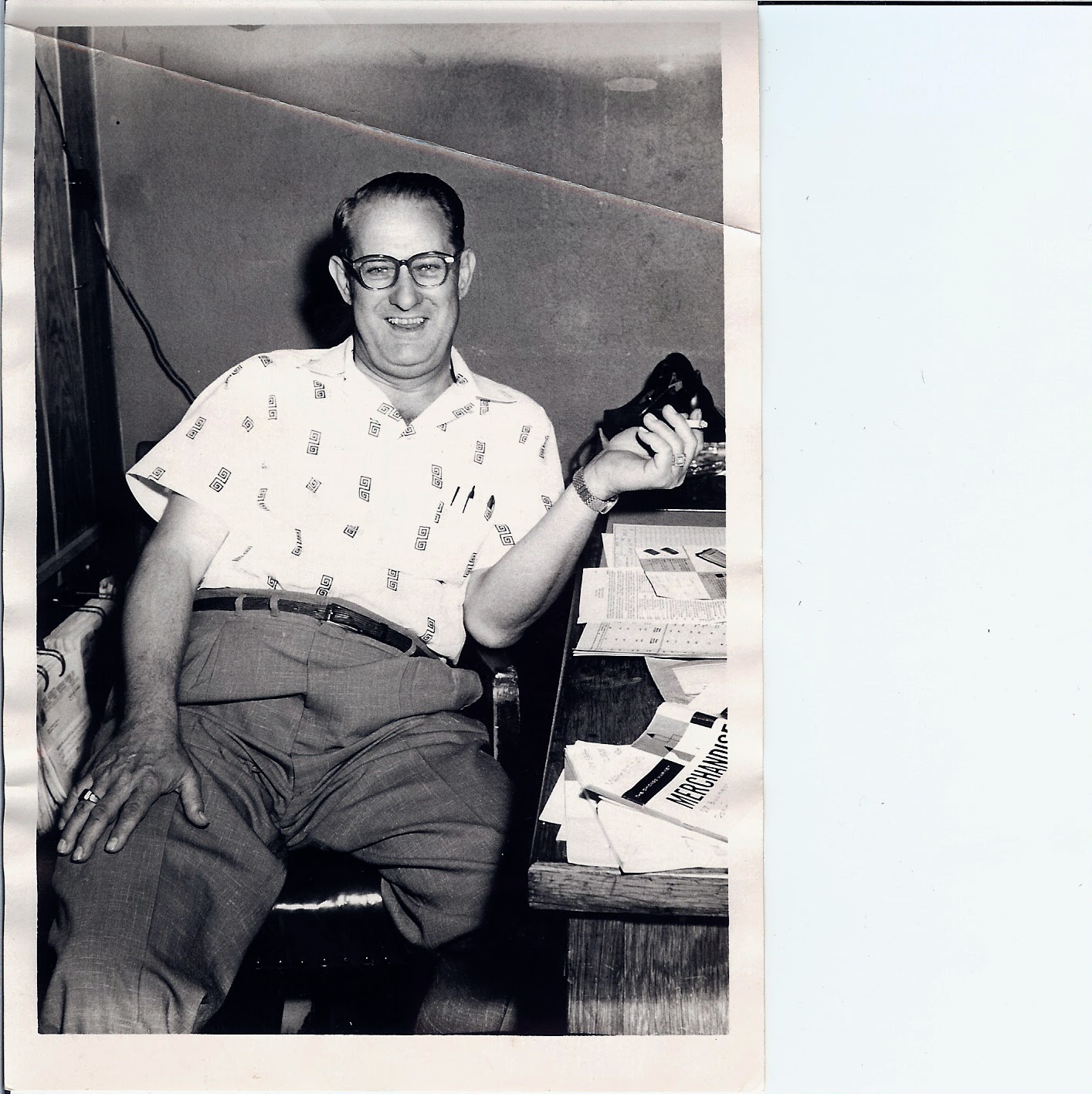
My grandfather, Oscar Lee McCall, at his desk in his furniture store in Enterprise.

The view into Mexico from the Outer Mountain Loop in Big Bend National Park. Big Bend was so hot when we were there in February 2022 that we started hiking well before dawn. Later in the year, people routinely succumb to the heat.

A porch in West Texas.

Rollin' Smoke BBQ in Anthony, Texas.