Showing posts with label black and white. Show all posts

Tuesday, November 25, 2025

Chiricahua Storm

Storm over the Chiricahua Mountains viewed from the New Mexico Bootheel.
(Click images to view larger)

Southern New Mexico has been in drought since we moved from Wyoming over two years ago. In normal years, the Arizona monsoon brings summer storms, blocking the sun and cooling temperatures. Even then, this is a sunny place, so it's exciting when rains come as they have over the last few days thanks to two low-pressure systems that swept from the California coast across the Southwest and then into the Plains. After rain, locals check their rain gauges and send texts to each other. It can feel almost competitive.

“How much did you get??” 

“We got 0.7 inches. How about you?” 

The sunshine is nothing to complain about, especially for those of us who love the arid West. For most of us, sunny skies and expansive vistas beat the dreary gray and oppressive undergrowth of more humid places. 

Photographically, startling clear blue skies are less interesting than dramatic storms or even well-spaced summer cumuli, so I was excited last weekend while driving home from visiting friends in Bisbee, Arizona when a storm engulfed the Chiricahua Mountains of Southern Arizona. By then, we were in New Mexico’s bootheel, looking west at the mountains where the sun poked through the clouds just enough to highlight a few places in the landscape. It was spectacular, and I stopped to shoot a few photos over the barbed wire fence beside the highway. 

Roadside view. 

The big picture.

Moody version of the storm


Friday, February 4, 2022

Photographing the Nebraska Panhandle in Black and White


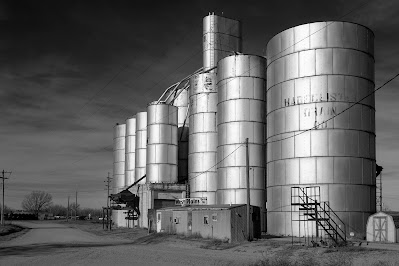
Grain storage in Crawford, Nebraska.
(Click on images to view larger)

In his book, Dirt Meridian, photographer Andrew Moore published a series of color photographs of the western Great Plains, many taken from a small plane flown low over the Nebraska Panhandle. His images capture stark landscapes, abandoned farms, and people who live and work there. 


I love this genre: documentary images of hardscrabble scenes. Moore’s website suggests that his projects “record the effect of time on the natural and built landscape,” but they transcend a mere record, blending documentation with a keen aesthetic eye


Color photography has always felt the most natural to me, but I also admire the black and white masters whose craft requires a less intuitive way of seeing, translating color to tone and managing complex tonal relationships. Recently, Gregg Waterman, himself a talented photographer, pointed me to the work of David Plowden, who spent over 50 years photographing landscapes like those featured in Dirt Meridian, but in B/W and from the ground rather than the air. His work documents the natural beauty of the Great Plains and Midwest but also the remains of farms and ranches abandoned in the American migration to cities. Plowden recognizes this change in a quote on his website:


“I have been beset, with a sense of urgency, to record those parts of our heritage which seem to be receding as quickly as the view from the rear of a speeding train. I fear that we are eradicating the evidence of our past accomplishments so quickly that in time we may well lose the sense of who we are.” (Source)


Plowden studied under Minor White, a pioneer of meticulous B/W photography of subjects ranging from rural America to the male figure, and he rubbed elbows with Ansel Adams, Alfred Stieglitz, and Edward Weston. White’s influence is evident in his work, but Plowden’s photographic voice is his own. 


Inspired by Plowden’s photographs, I drove east from Laramie to the Nebraska Panhandle on a warmish late-January day, first to Sidney and then north to Chadron, stopping to explore along the way before turning towards home. It was fun but a little sad to be out photographing small towns and old farms. Many buildings were boarded up and downtowns mostly abandoned despite the nice weather. I enjoyed not-too-bad onion rings from a tiny store and basked in the warm sun, welcome after months of Wyoming wind and cold.


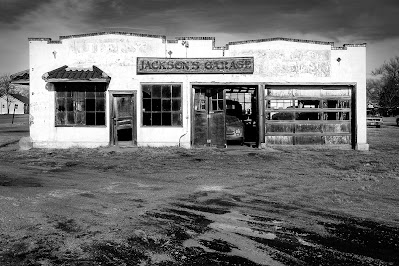
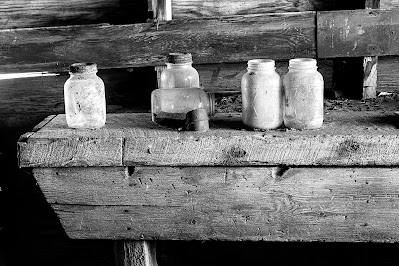
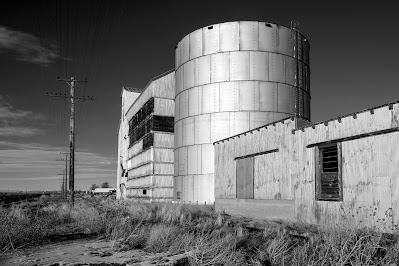
These photographs are my favorites from the trip, clumsily processed. B/W requires different skills than color photography, and I’ve always enjoyed the photographing more than the processing, but these scenes, especially in winter, lend themselves to monochrome. 


Jackson's Garage, Bridgeport, Nebraska.

Jackson's Garage detail.

Abandoned farm, Rt. 20 west of Crawford, Nebraska.

Jars and workbench, abandoned farm west of Crawford, Nebraska.

Ranch signs south of Dalton, Nebraska.

Trees and fields, Route 20 near Nebraska-Wyoming border.

Grain elevator near Bushnell, Nebraska.

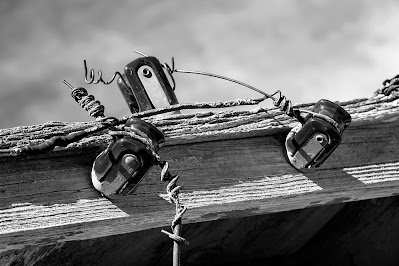
Insulators east of Dix, Nebraska.

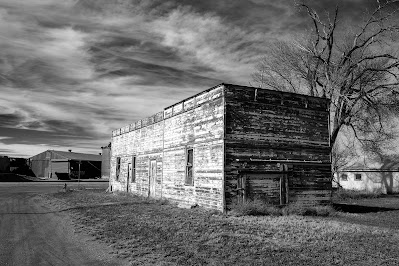
Building, Bridgeport, Nebraska.

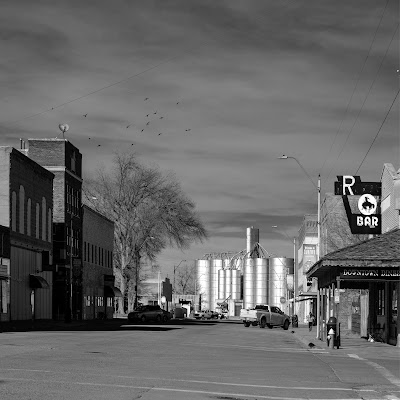
Downtown Crawford, Nebraska.


Saturday, November 3, 2012

Old Family Images

Torch Lake, Michigan
(Click on images to view larger)

Unless some tragedy has befallen us, like a catastrophic fire or a hurricane, many of us have collections of old photographs in our families.  Sometimes these images are mysterious, with  unknown people long gone, saved because the image has been passed down like a sacred object.  Sometimes the images are artful.  Often they hold our attention because we wonder about distant ancestors and how their lives have somehow shaped our own.  Sometimes they are pictures of our parents when they were younger or of ourselves in what looks like a different world.  

My family has boxes of old images from both my mother's and my father's side.  Some of them have been scanned, and occasionally I work on them--cleaning them up and trying to make them so that they look more like they did when they were taken.  

My Mom, in Enterprise, Alabama where she grew up.  My parents have two cats today and so do we.

My Dad during a bike trip in Michigan where he grew up, long before mountain bikes.

The Grimes, on my mother's side, in Alabama.

My Mom's father, Oscar Lee McCall, at his furniture store in Enterprise.

My Dad with his mother, Nelle, in Arizona.

Me and my sister, Kim, being treated to a Coke at my grandfather's store in Alabama.

My dad and grandmother, "somewhere out West."  Their trips west and the stories about them led me to Wyoming.


Friday, August 10, 2012

From the Archives: Deqin, China

Yangtze River Valley from road to Deqin, Yunnan.
(Click to see larger)

School is approaching, and with it the low level panic of new course preparation.  So blogging has fallen to the wayside.  Here are a few black and white images from Yunnan, China, all taken in 2006 with a 6 Mp Nikon D70, pretty low resolution compared to today's cameras (the Nikon D800 makes 36 Mp images), but still printable.  The area in these shots is on the Yunnan-Tibetan border, a place I would love to revisit, though I'm afraid of what tourism might be doing to it.  The nearby village of Yubeng was only accessible on foot when I was there, and even so, Chinese tourists were flocking there to see the spectacular peaks of the Meili Xueshan, and a sacred Tibetan waterfall.  I hiked to Yubeng after descending into the wrong drainage to the Mekong, and spending a night with a friendly Tibetan family that lived along the river and took me in for the evening.  

The Meili mountains 

The road from Zhongdian to Deqin.

Sunday, June 10, 2012

B&W Magazine: What to submit?

Every year, B&W Magazine, a showcase for "fine art" photography (I've always thought that calling your art "fine" is like a restaurant advertising "fine dining"--a little suspect), has a Single Image Competition.   Winners are published in a special issue of the magazine that I always enjoy.  I'm agonizing a little about what to submit this year; the three images below are my top choices, though I may add one to the list.  What do you think?  Leave a comment if you are so inclined!

Click on any image to view a larger version...

Image #1

Image #2

Image #3

Sunday, November 6, 2011

One School at a Time Sponsorships

                                           Brenda at Coal Bin, Kampala, Uganda 2009

I returned to Laramie from Boulder, Colorado last night, where I attended a Board of Director's meeting for One School at a Time, the non-profit that I photographed for in Uganda in 2009.  One School partners with individual schools (one at a time) to improve educational opportunities for rural Ugandan kids.  They're small and they do a fantastic job of working with the school community to make sure that any improvements made to the schools will continue to function long after One School has left.  Lots of NGO's drop money into projects in Africa without ever really engaging with the people they are trying to help.  The result is a surprising legacy of decaying infrastructure, unusable or in disrepair.  When I was in Uganda I saw  textbooks on the history of Robert E. Lee in the South in donated "libraries" at rural schools, and an articulating hospital bed in an empty concrete room at an unstaffed "clinic" among banana trees.  One School is remarkable in that 96% of their funds go directly to their projects (tiny overhead for an NGO) and the projects continue to function on their own, thanks to carefully crafted community buy-in.

Early in the history of One School several of the directors traveled to Uganda where they met individual children, like Brenda, in need of support.  Later, they decided that individual sponsorship, though badly needed, was not the most efficient way to use their limited resources, so they evolved towards the current school partnership model.  Nevertheless, several of the directors personally took on sponsorships of a handful of children, including Brenda (above) and her sister Agnes, whose mother worked in a coal bin in Kampala selling coal for the owner for less than a dollar a day.  The girls were living in a nearby shack with their mother and suffered from crushing poverty and frequent illness.  Thanks to the sponsorships, these girls are now thriving and eager to attend secondary school, which costs more money than their original sponsors can afford alone.

One School is looking for a few people willing to commit to a long-term sponsorship (5 years) of one or more of these 5 or so children to get them through secondary school.  A commitment of $500/year for 5 years for each child would be ideal to cover all of their costs, although $100/year for 5 years would make a difference.  For these particular sponsorships, the directors are not looking for small donations, though you are certainly encouraged to donate whatever you can to One School at a Time to contribute to their school partnerships.  If you'd like to take on a long-term sponsorship, contact Bay Roberts, the One School director.  If you are interested in making any kind of donation to One School, you can do so at this page.

I'm hoping to put together a proposal to return to Uganda in 2012 to do a story on the issues and challenges associated with educating girls there.  Stay tuned for more information on this as I begin to plan for this project.